Japan in 12 days
Twelve days by train: Tokyo, a day in Nikko, a night under Mount Fuji, Kyoto and Nara, Osaka, Hiroshima and Miyajima. Probably the best trip of our lives, mostly because of the people.
Shorter versions skip whole days, the ones I'd skip myself. The added days are ideas from our planning, not places we went. Every day has a Google Maps link; the My Maps file has every place (import it at google.com/mymaps).
It was the people
We went for the shrines and temples, Mount Fuji and the food. Japan felt like an intense mix of the future and the past: the neon glow of Akihabara one night, a centuries-old shrine in a cedar forest the next morning. But what we remember most is the people: a cab driver who went out of his way to show us Fuji, a train driver who stepped off his train to help us buy tickets, strangers who stopped whenever we looked lost. We came home grateful. Read more in The people, at the end.
Tokyo, Fuji, Kyoto, Osaka, Hiroshima
Fly into Tokyo and out of Tokyo, and go everywhere else by train, with a couple of buses around Mount Fuji. Cities are best on foot; the days swing between neon cities, old shrines and temples, and two of the most beautiful nature days of the trip: Mount Fuji at sunrise and the view from Mount Misen. It’s an ideal first trip to Japan: the classic sights, in a sensible order. If you’ve been before, skip the most crowded famous spots (Kyoto’s especially) and look for quiet places like the ones we stumbled on.
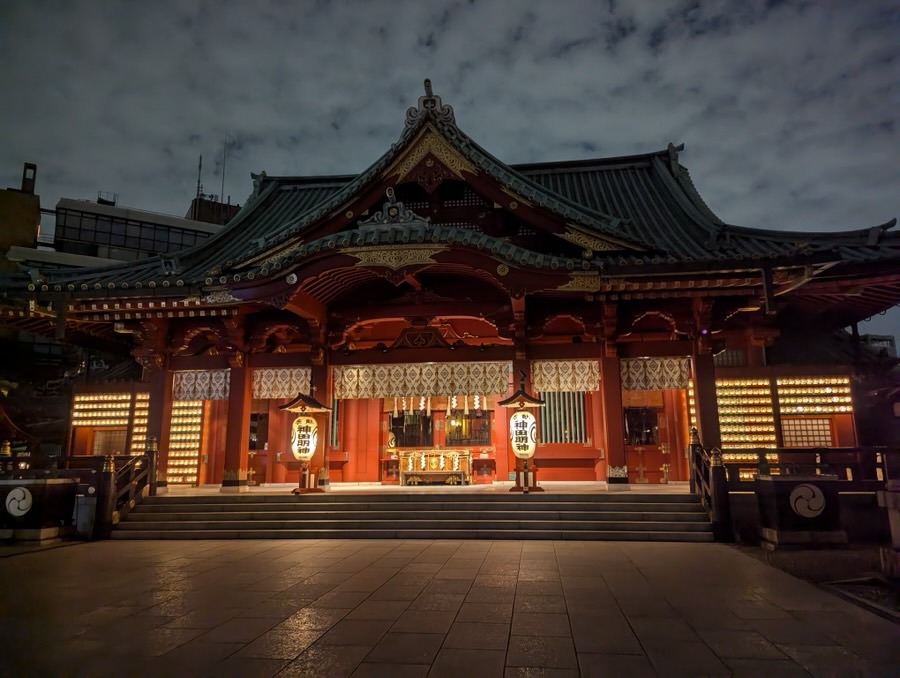
Day 1
Tokyo: Asakusa, Harajuku, Shibuya, Shinjuku
- See Arriving late: Kanda Myōjin shrine, lit up at night near Akihabara
- Walk Asakusa: Kaminarimon (Thunder Gate) → Nakamise-dōri and the shopping streets around it → Sensō-ji, Tokyo’s oldest temple Sensō-ji is dedicated to Kannon, the Bodhisattva of compassion: Avalokiteśvara, who came from India to Japan with Buddhism. We also found matcha beer somewhere in these streets.
- Walk Omotesandō and Harajuku: Omotesandō → Harajuku Station → Meiji Jingu shrine → Meiji Jingu inner garden → Takeshita Street Ultra-modern buildings with open façades and gardens on top, and Harajuku street fashion (lots of gothic looks). Very crowded, which we didn’t enjoy, but we were part of it: a glimpse of an ultra-commercial world, a few minutes from the calm of Meiji Jingu’s forest.
- Walk Evening in Shibuya: Omotesandō at night → Shibuya Crossing → Shibuya Center Gai
- Walk Night in Shinjuku: Kabukichō → Golden Gai bars
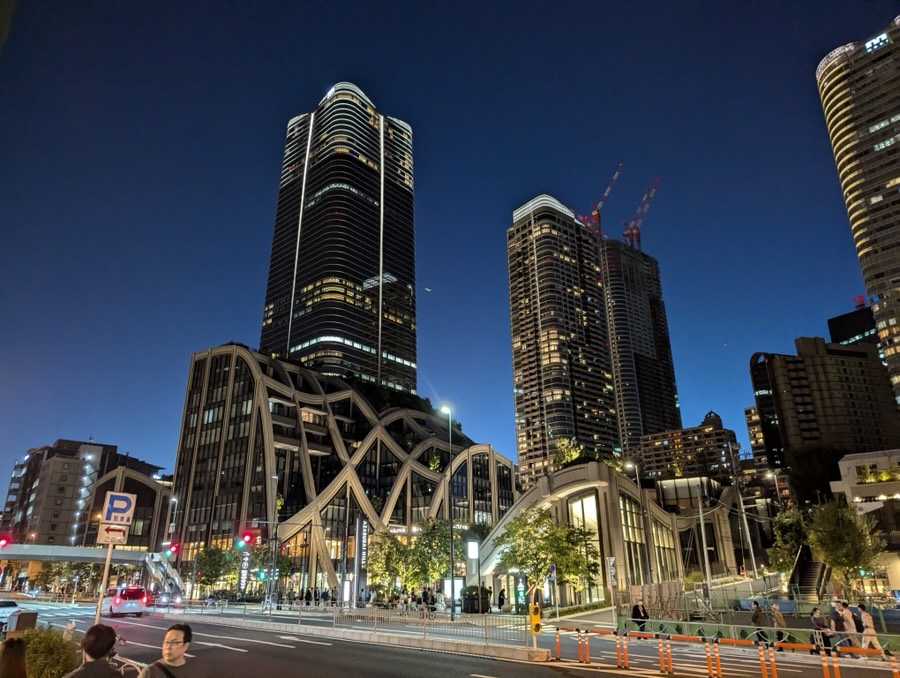
Day 2
Tokyo: Imperial Palace, Tsukiji, Ginza, Roppongi
- Walk Imperial Palace: Nippon Budōkan and Kitanomaru Park → Kitahanebashi Gate and the moat → Imperial Palace East Gardens
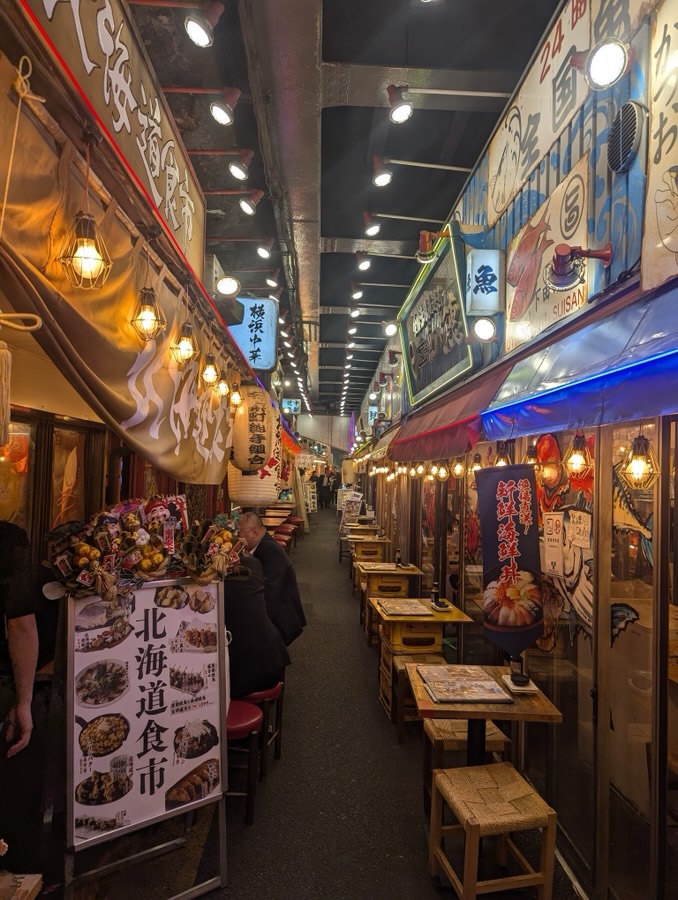
- Walk Tsukiji: Tsukiji Hongan-ji → Tsukiji Outer Market
- Eat Seafood bowl and street skewers at Tsukiji Outer Market
- Walk Yūrakuchō’s alleys under the railway → Ginza
- Walk Chūō-dōri in Akihabara, closed to cars on Sundays
- See Tokyo City View at Roppongi Hills: the city and Tokyo Tower at night
- Eat Dinner in Roppongi
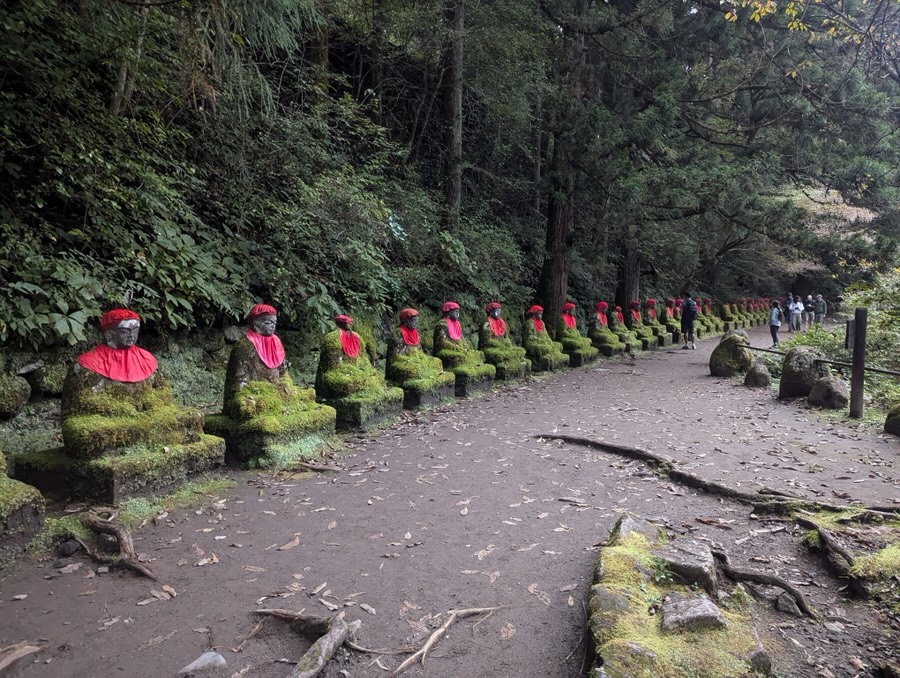
Day 3
Day trip to Nikko
- See Nikkō Tōshō-gū, the lavish shrine of the first Tokugawa shogun Nikko’s two shrines (Tōshō-gū and Futarasan) and one temple (Rinnō-ji) are a UNESCO World Heritage site together.
- See Rinnō-ji’s Hall of Three Buddhas, and its garden in autumn colours Three giant gilded statues stand side by side. It felt like a Hindu trinity; they are Buddhist forms of the gods of Nikko’s three sacred mountains.
- See A forest path down to the river and the red Shinkyō Bridge — Forest path down to the river, Shinkyō Bridge
- See Kanmangafuchi Abyss: a riverside walk past rows of stone Jizō statues — Daiya River, Kanmangafuchi Abyss Across the river, Sanskrit letters are carved into the rock: “kanman”, the last word of the mantra of Fudō Myōō (Acala in Sanskrit), which gives the abyss its name.
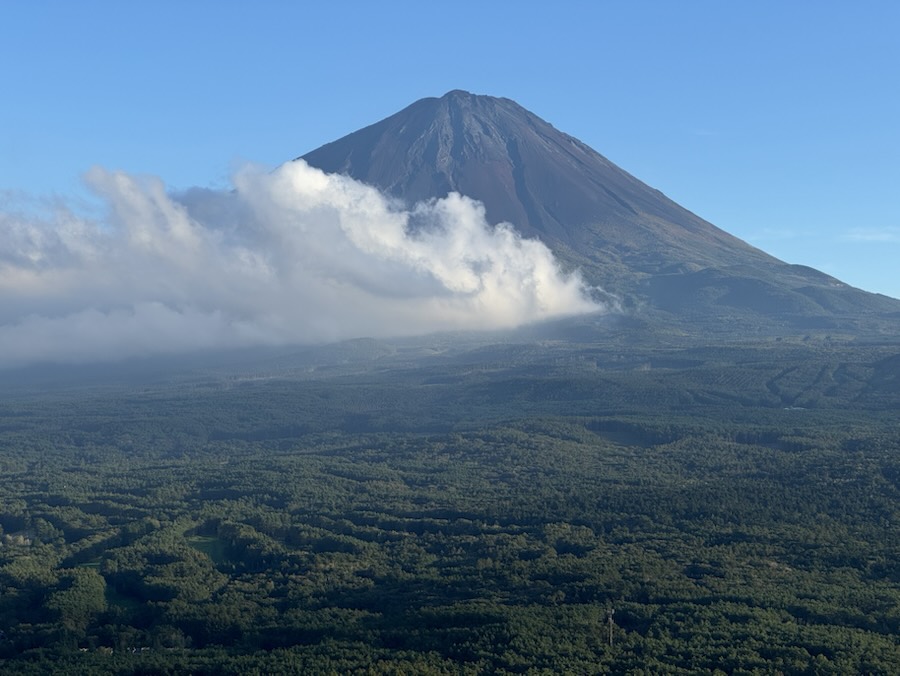
Day 4
Tokyo to Mount Fuji
- Walk Nishi-Shinjuku’s skyscrapers and the Tokyo Metropolitan Government Building (the queue for its free observation deck was too long)
- See Saiko Iyashi-no-Sato Nenba: a farming village of thatched houses with roofs shaped like a samurai helmet, destroyed by a typhoon landslide in 1966 and rebuilt as an open-air museum, facing Mount Fuji. We got here by cab, and the driver made the day (see “It was the people”) — Lake Saiko, Iyashi-no-Sato Nenba
- See Kōyōdai: up an unpaved road to a viewpoint run by an old couple. The best view of Fuji, and no one else there
- See Oishi Park on Lake Kawaguchi: red kochia bushes with Fuji behind — Lake Kawaguchi, Oishi Park
- Missed Oshino Hakkai, the spring-fed ponds with Fuji views
Day 5
Fuji sunrise, then Kyoto
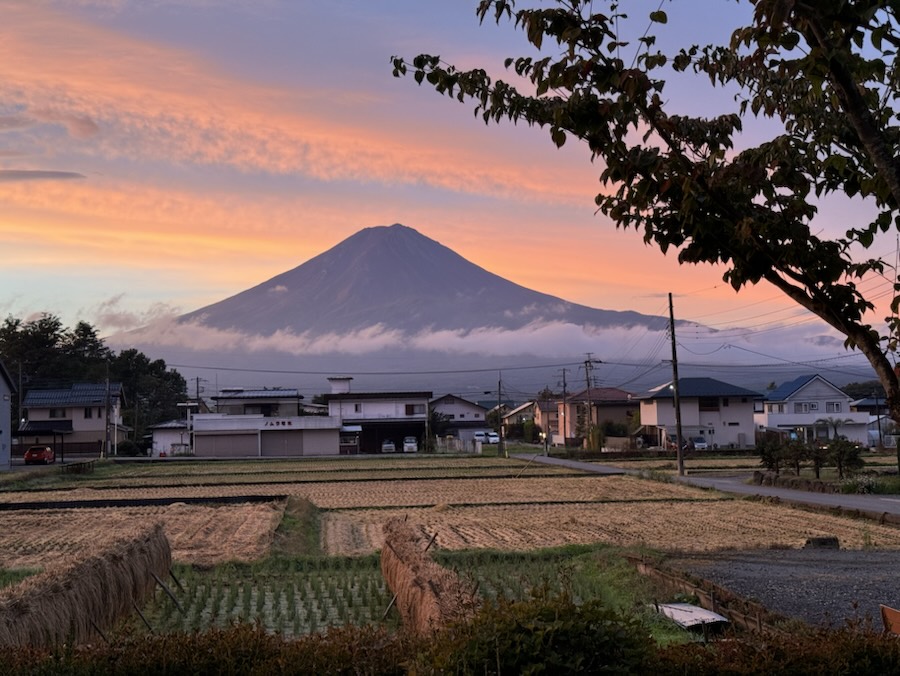
- See Sunrise over Mount Fuji from where we stayed, near Lake Kawaguchi (Best nature)
- See Mount Fuji from the Shinkansen, sitting on the right side
- Walk Higashiyama, Kyoto: Kiyomizu-dera → Sannenzaka and Ninenzaka → Yasaka Pagoda → Nene-no-michi → Yasaka Shrine, lit up at dusk → Gion Kiyomizu-dera, like Sensō-ji, is a temple of Kannon (Avalokiteśvara).
- Walk Evening in Kyoto: Kamo River → Pontochō alley → Sanjō Bridge
- See Heian Shrine’s giant red torii at night
Day 6
Kyoto: Nijō Castle, Nishiki Market, Fushimi Inari
- See Nijō Castle: the Ninomaru Palace, its gardens, and the view from the keep walls
- Eat Matcha and sweets at a tea house inside Nijō Castle
- Eat Lunch by grazing Nishiki Market: tamagoyaki, sea urchin, seafood skewers
- Walk Teramachi and Shinkyōgoku covered shopping streets
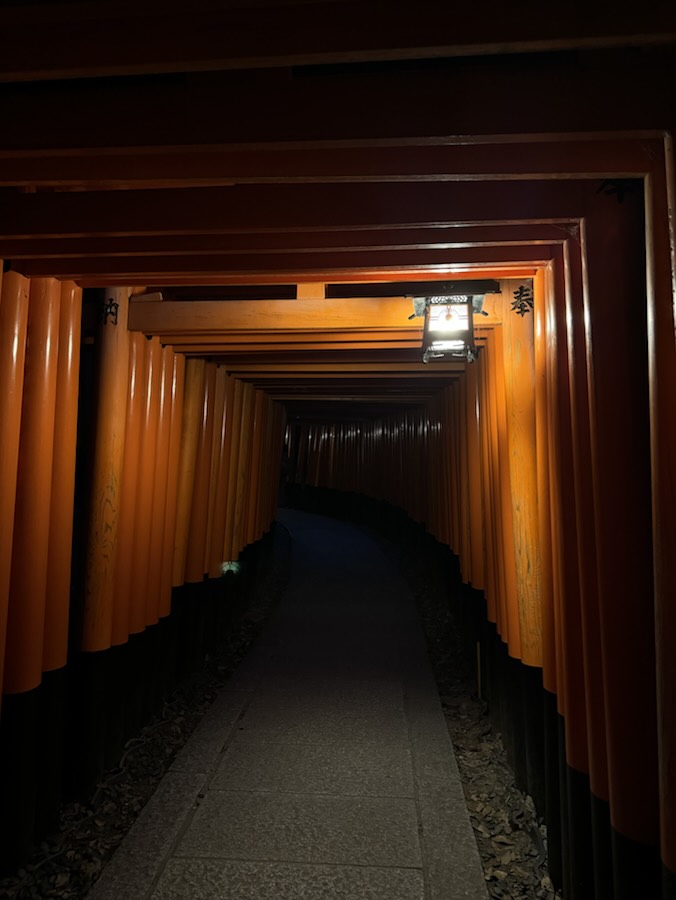
- See Fushimi Inari Taisha at dusk: tunnels of red torii
- Eat Dinner at Gyukatsu Kyoto Katsugyu, near Fushimi Inari: crisp beef cutlet. Absolutely amazing
- Missed Kinkaku-ji, the Golden Pavilion
- Missed Arashiyama’s bamboo forest and Tenryū-ji: we skipped them because the bamboo forest is famously crowded. Quieter bamboo: Adashino Nenbutsu-ji nearby, or the small grove at Kōdai-ji in Higashiyama — Arashiyama bamboo forest, Tenryū-ji, Adashino Nenbutsu-ji
- Missed Sanjūsangen-dō, with its 1,001 statues of Kannon
- Missed A geisha dance performance in Gion
Day 7
Nara, then Osaka
- See Kyoto Station’s giant atrium and Skyway
- Walk Nara Park: Nara Park and its deer → Kasuga-taisha → Tōdai-ji Nandaimon gate → Tōdai-ji Great Buddha Hall → Isuien Garden and the Neiraku Museum Nara was Japan’s capital from 710 to 784, before Kyoto. Tōdai-ji’s Great Buddha Hall is guarded by Kōmokuten and Tamonten, two of the Four Heavenly Kings who came from India with Buddhism (Tamonten is Vaiśravaṇa, the Kubera of Hindu tradition). The fierce Niō in the great gate are forms of Vajrapāṇi.
- Walk Dōtonbori, Osaka, at night along the canal: famous, but a disappointment (see the honest notes)
Day 8
Osaka in the rain
- See Osaka Castle: the moats, the park, and the view from the top floor — Ōtemon Gate, Osaka Castle
- Eat Black beef sushi from a shop inside the castle grounds, where the rain drove us. Then ice cream (Best bite)
- Walk Shinsaibashi-suji arcade → Dōtonbori and the Glico sign → Namba
- Missed Umeda Sky Building
- Missed Kuromon Market
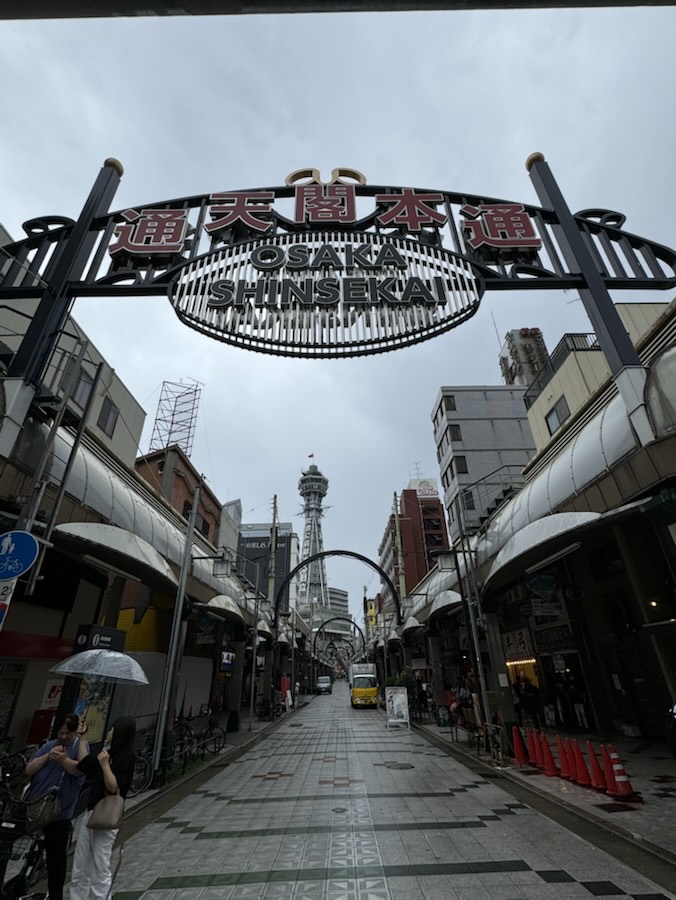
- Missed Shinsekai and Tsūtenkaku tower (our friends went)
Day 9
Osaka to Hiroshima
- See Hiroshima Peace Memorial Museum
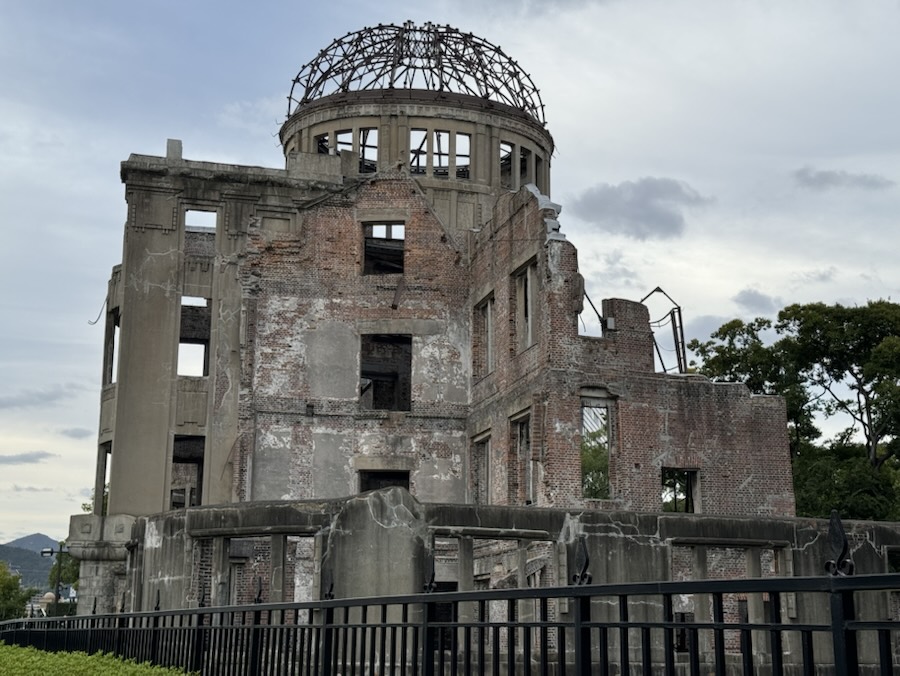
- Walk Peace Memorial Park and the Cenotaph → Atomic Bomb Dome
- Walk Hondōri shopping arcade
Day 10
Miyajima
- Walk Peace Memorial Park in the morning
- Eat Grilled oysters on Miyajima
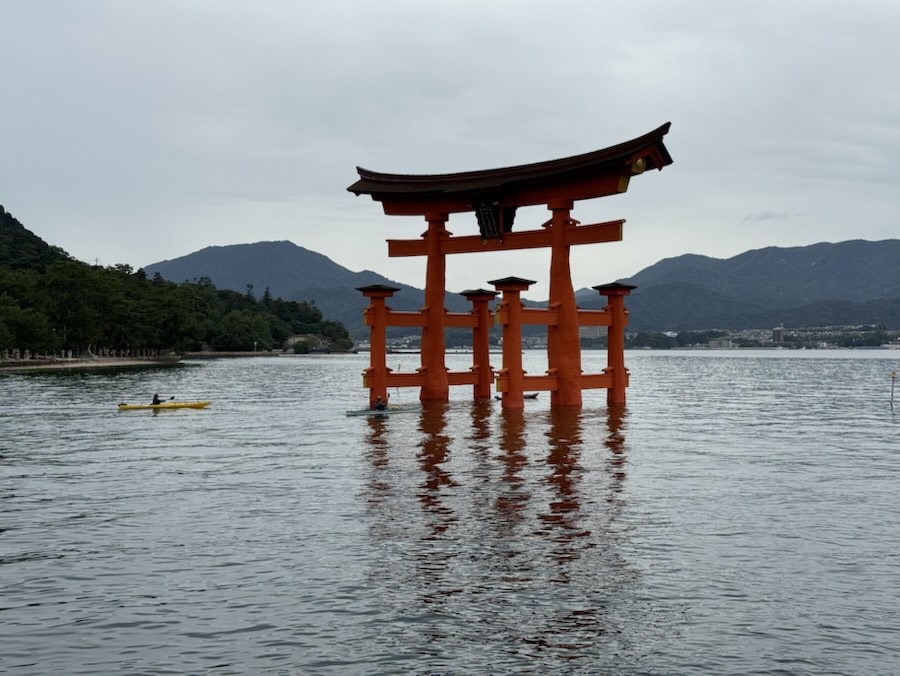
- See Itsukushima Shrine and its torii standing in the sea (Best sight) For centuries the shrine’s goddess was identified with Benzaiten, who is Saraswati of Hindu tradition. When Shinto and Buddhism were separated in 1868, Benzaiten moved next door to Daigan-ji, one of Japan’s three great Benzaiten temples.
- See Momijidani Park, a maple valley at the foot of Mount Misen
- See Ropeway up Mount Misen, then a short hike to the views over the Inland Sea — Miyajima Ropeway, Mount Misen
- See The torii again at sunset, then a dash for the last boat back: we only just made it after hiking down
- Eat Teppanyaki dinner in Hiroshima: wagyu, seafood and vegetables on the grill (Best food)
- See The Flame of Peace at night
Day 11
Hiroshima back to Tokyo
- Eat Fruit sandos from Be! Fruits Sandwich, a shop at Tokyo Station that sells nothing else
- Walk Tokyo at night: Yaesu → Kyōbashi → Ginza at night
- See Tokyo Tower lit up, and Zōjō-ji below it, near midnight — Tokyo Tower, Zōjō-ji
Day 12
Tokyo: Ueno, then home
- Walk Ueno Park
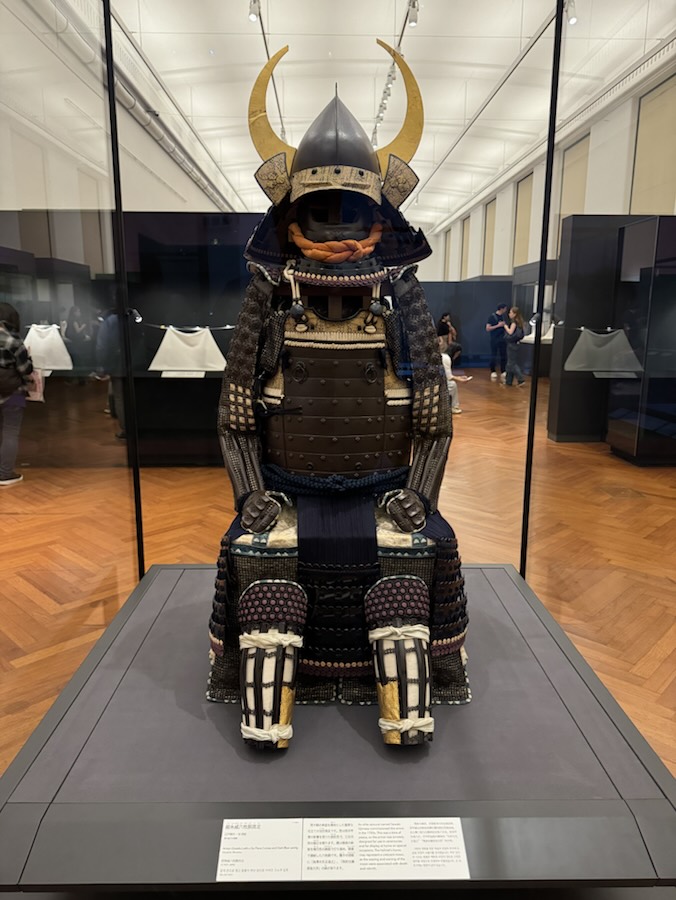
- See Tokyo National Museum: samurai swords, Buddhist statues, lacquer and ceramics Here we found Taishakuten, a 10th-century guardian whose label says he may be based on Indra (or Brahma): one of many Hindu gods taken into Buddhism as its protectors.
- Eat A bottle of plain milk at the milk stand in Akihabara Station. Simple, and so good
- Eat Katsu curry in Akihabara
- Walk Shiba Daimon gate and Hamamatsuchō
Thoughts & take-aways
- The people make Japan.
- Nothing gets lost in Japan, so travel light: send your suitcases ahead and carry a backpack.
- You don’t need a car. Trains, a highway bus and the odd cab took us everywhere, and we never regretted it.
- Ride the Shinkansen at least once; for a long ride, the Green Car is worth it.
- Go early, or go where the tripods aren’t. The quiet places felt like heaven.
- Leave room for the unplanned: a drinks fair, a food festival, sushi in a castle. They were the best moments.
- Covered shopping streets and markets run for blocks, some underground. A rainy day can be spent entirely under them.
- Shops and services fill every floor of a building, not just the street level. Look up.
A short history refresher
Two religions, intertwined: Shinto and Buddhism.
Shinto is Japan’s own faith, of kami (gods and spirits) in nature, ancestors and places. Buddhism arrived in the 6th century, from India by way of China and Korea. For over a thousand years the two blended: kami were seen as local forms of Buddhas, and shrines and temples often shared grounds. The government formally separated them in 1868, but you still see them side by side, as in Nikko.
Shrines are Shinto, temples are Buddhist.
A shrine has a torii gate: bow twice, clap twice, pray, bow once more. A temple has a sanmon gate: bow and pray with your hands together, no clapping.
Hindu gods came to Japan with Buddhism.
This surprised me most. Buddhism brought many Indian gods with it, renamed and recast as protectors of the Buddha: Bonten is Brahma, Taishakuten is Indra (the two often stand either side of a Buddha; Tōdai-ji has 8th-century statues of the pair), Benzaiten is Saraswati, Daikokuten comes from Mahākāla, a fierce form of Shiva, and Bishamonten or Tamonten is Vaiśravaṇa, the Kubera of Hindu tradition. Kannon, the Bodhisattva of compassion at Sensō-ji and Kiyomizu-dera, is Avalokiteśvara.
Nara, then Kyoto, then Tokyo.
Nara was Japan’s first permanent capital, from 710 to 784. After ten years at Nagaoka, the capital moved to Kyoto in 794 and stayed for over a thousand years. Real power often sat elsewhere, with the shoguns in Kamakura and then Edo, today’s Tokyo, which became the capital in 1868. Nikko was never a capital: it is where Tokugawa Ieyasu, founder of the Edo shogunate, is enshrined.
The people
Our cab driver at Mount Fuji made the trip.
Fuji was hidden when we arrived, so we took a cab to Iyashi-no-Sato Nenba, a little sceptical and talking only through a translation app. He worked out that we hadn’t seen Fuji yet, watched for it, and stopped as soon as it appeared. At Nenba he offered to wait, and waited an hour or two without asking for anything. On the way back he asked if we’d like to see a local favourite: he drove up an unpaved road, hard on his car (we briefly wondered if this was a kidnapping), to Kōyōdai, a viewpoint run by an old couple. Best view of Fuji of the trip, and no one else there. Then he took us to Oishi Park.
Tipping is frowned on, so we asked first.
We wanted to thank him properly. We put the money in an envelope and asked, politely, whether he’d mind if we gave him more than the agreed fare. He hesitated, then accepted.
A train driver got off his train to help us buy tickets.
We thought our pass was enough; it wasn’t, and the train was minutes from leaving. The driver stepped down, walked us to the ticket machine, watched us fumble, took over, worked out the fare, waited calmly while we fumbled with the cash, and then got back into his cab.
In Hiroshima, strangers kept stopping to help.
Every time we stood looking lost at a map for a few minutes, someone stopped to guide us. It happened again and again, in a city that has suffered so much.
Pride in the work, even in small things.
An old cab driver looked almost hurt when I loaded my own suitcase into his car, and wouldn’t let me hold his bag to make his seat more comfortable. On the Shinkansen, the ticket inspector was unfailingly courteous and respectful.
We didn’t speak Japanese, and it hardly mattered.
We should have prepared better, and communication was a struggle. Yet everywhere we went, people found a way to help. We came home grateful to the people we met, and for being lucky enough to see Japan this way.
We felt completely safe, at any hour.
We walked around late at night without a worry. Bright streets and shops open late made the cities feel alive rather than empty.
Getting around without a car
Public transport everywhere, and no regrets.
Unlike our Central Europe trip, we didn’t rent a car. Trains took us everywhere, plus a highway bus to Mount Fuji and a local bus back down to the Shinkansen, a boat to Miyajima, and the odd cab.
Take the Shinkansen, and treat yourself to the Green Car.
We took three bullet trains: from near Mount Fuji to Kyoto, Osaka to Hiroshima, and Hiroshima back to Tokyo. Smooth, comfortable and fast; we loved every ride. For the long one back to Tokyo we upgraded to the Green Car (first class), and the service was excellent. Pick up a bento at the station before you board.
Send your luggage ahead, and skip a stop.
Most hotels will forward your suitcase to your next hotel for a small fee, with handwritten forms and no computer system in sight. It always arrived on time. Our trick: send it two stops ahead (Tokyo straight to Kyoto, say) and carry a backpack for the night in between. When ours hadn’t reached Kyoto yet, the hotel staff said, “Nothing gets lost in Japan.” They were right.
Get a Suica or Pasmo card.
One card works on most city trains and metros, and in convenience stores. The Shinkansen (bullet train) is ticketed separately. Check whether your pass covers each train before you board.
Your phone does the rest.
An eSIM before you land, Google Maps for train routes and platforms, and a camera translation app (Google Translate, Papago) for menus and signs.
Eating
The best meal: teppanyaki in Hiroshima.
Wagyu, seafood and vegetables cooked on the grill in front of us.
The best bite: black beef sushi inside Osaka Castle.
It was raining, so we ducked into the shops in the castle grounds. Who expects great food there? It was the best single bite of the trip.
Some of the best food was unplanned.
A Japanese drinks fair we stumbled into in Akihabara (buy coupons, taste everything), a food festival in Nara Park, grilled oysters on Miyajima, a fried-dumpling place with endless dumplings and cold Japanese beer, matcha beer in Tokyo, and a bottle of plain milk at the milk stand in Akihabara Station that we still talk about.
Go to a convenience store every day.
We did, for random desserts, fried chicken that was always juicy, and fruit sandos: soft white bread with cream and fresh fruit, the best of all, and often sold out. One day we went to Be! Fruits Sandwich at Tokyo Station, which sells nothing but fruit sandos. 7-Eleven for onigiri and sandwiches, FamilyMart for fried chicken, Lawson for desserts. With a store open on almost every corner, we never worried about food or drinks.
Look out for the fresh orange juice machines.
Cheap machines that squeeze oranges on the spot, in several places. After a long day walking in the heat and humidity, they were a lifesaver.
Book the popular restaurants, or expect a long wait.
Some popular restaurants only take bookings through Japanese reservation apps such as Tabelog or TableCheck, which now work in English. Without one, expect long queues at the famous places in Tokyo and Kyoto.
Meals there are long and slow.
At izakaya-style places we would order a few dishes, eat, drink, order more, and keep going for three or four hours. It’s a different rhythm from the one-main-course dinners we’re used to elsewhere, and we loved it.
The beer tasted different, and we can’t explain why.
Nothing fancy, just the everyday Asahi and the rest. They all say “dry” on the label, but they didn’t taste dry, and the same labels at home don’t taste the same. Our best guess is freshness: in Japan it’s brewed nearby and served fresh and very cold, often on draft, while abroad it has travelled for weeks or is brewed under licence elsewhere. We could have drunk a lot of it.
Markets, and miles of covered streets.
Tsukiji, Nishiki, and the long covered shopping streets were highlights in themselves: you can walk for blocks under cover, or underground. Try Hiroshima-style okonomiyaki in Hiroshima.
Temples, shrines and crowds
Kyoto was crowded, but it is truly the cultural capital.
The famous spots were packed with people chasing the perfect photo, which took some of the joy out of them. Even so, nowhere else felt so full of history and culture. Go early, or pick the quieter temples.
Go early, and look for the quiet places.
The famous spots are crowded, and full of photographers with tripods. Early mornings, and places like Kōyōdai where we were alone, felt like the real Japan.
The days are short in early autumn.
It gets dark around 5 pm, and most sights close about then. Plan the important ones for the morning.
Bring comfortable shoes.
We walked so much that our feet hurt.
Honest notes
Dōtonbori was a disappointment.
The food was so-so, and it was the least clean place we saw in Japan; we even saw rats near the restaurants.
Akihabara after midnight shows another side.
Our first night, we walked out after midnight and found women in anime costumes handing out flyers for “girlfriend” bars, where men pay for company and conversation. Harmless, but it felt strange next to everything else we saw.
About the numbers
Walking times are routing estimates for the stops in the order listed (FOSSGIS foot router on OpenStreetMap data), without time spent at them. Train times are roughly what our trips took. Lines between cities are straight, not the actual tracks. Photos are from the trip. Map data © OpenStreetMap contributors; map tiles by OpenFreeMap. The itinerary is also available as data and as text.